Understanding Promotions: A Strategy Guide for SMBs

February 10, 2026
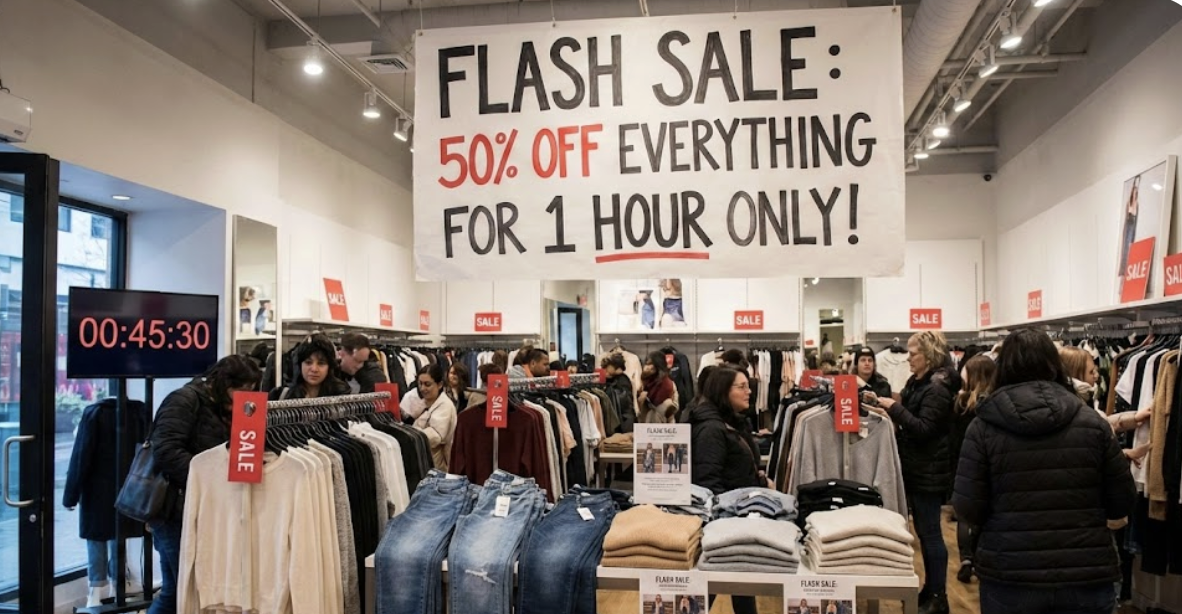

Promotions can be the catalyst that sets your small and medium-sized business (SMB) apart from your competitors. All too often, SMBs launch them with no coherent strategy, reacting instead to poor sales or what they see their competitors doing. A thoughtful approach to which promotions to run can turn them from reactive customer acquisition costs into profit drivers.
Why Promotions Matter
The purpose of promotions is to create urgency, lower purchase friction, and understand first-hand what customers want from your brand. At their most effective, they are also measurable and trackable in a way that other, more expensive marketing channels can’t be. A data-driven promotions strategy will guide which customer acquisition tactics you use to achieve your sales and marketing goals, while allowing you to identify which ones are most likely to deliver an ROI.
The real question SMBs should ask themselves is not whether to run promotions, but which of them provide the best ROI for their business. Research by Symphony Commerce found that SMBs without a promotions strategy may often run them too often. This makes your potential customers “deal-hardened” or conditioned to only buy during promotional periods. Lacking strategy can also result in offers being targeted to your entire customer base rather than to the specific audience that is most likely to respond to it.
Types of Promotions
Understanding which tactics work best to meet your goals is the first step to building an efficient promotion budget. No one promotion type is best across all objectives, and successful SMBs use a combination of tactics as their business priorities shift.
Flash Sales
Flash sales are short-term promotions with a hard end-date to create customer urgency. This promotional tactic is helpful when you have a lot of inventory to liquidate quickly, or when you’re testing how an untapped customer segment will respond to your products.
Research by MarketingSherpa found that a company’s flash sale promotions generated 236% more revenue than regular email campaigns with a conversion rate of 18.1% vs. 3.8% for normal promotional emails.
Here are some quick tips for running flash sales:
- Keep promotion windows short, so your marketing team doesn’t get overwhelmed, but long enough to drive a spike in revenue
- Announce your flash sales in advance to drum up anticipation across email and social media
- Use timer widgets to encourage users to convert before the promotion ends
- Discount high-margin products so promotions don’t eat into your profits
The psychology of flash sales is quite simple. Customers fear missing out on a good deal, and that feeling taps directly into time-limited offers. Of all the promotional tactics you can run, this is one of the few with guaranteed customer action and recurring revenue spikes.
BOGO Offers
BOGO promotions seem to tap into a specific human psychology. Customers react more positively to getting something “free” than they do to saving a percentage on an order.
Research published in ScienceDirect found that BOGOs generate 66% more attention than comparable percentage-off deals, and almost 93% of shoppers report having used a BOGO promotion at least once.
Here are some tips for BOGO sales:
- Pair up complementary products and cross-sell them to each other
- Pair a bestselling product with a new product to give it exposure to your established buyers
- Offer the second item at a substantial discount if you have a smaller margin on the add-on product
- Time BOGO deals around holidays and other seasonal shopping events
The reason that BOGO promotions often outperform flat discounts is because it doesn’t feel like a reduction. Instead, it’s a psychological trick that works because customers perceive the deal to be “more” rather than “less.”
Loyalty Programs
Loyalty programs are long-term promotions that also encourage repeat purchases and build customer relationships. As customers accumulate points and rewards, they develop an emotional connection with your brand, driving both retention and incremental spend.
According to Antavo’s 2024 Global Customer Loyalty Report, loyalty programs have an average ROI of 4.8x, and members generate 12-18% incremental revenue each year over non-members.
Effective loyalty programs include:
- Points-based systems where customers can redeem points for free merchandise
- Tiered programs that give customers something to work towards
- Member-only deals and early access to new products
- Rewards programs that use purchase data to personalize customer rewards
Personalization requires tracking and understanding customer behavior. This is why loyalty programs are fast becoming table stakes for SMBs, as more of them implement basic CRM tools to do so.
Gift with Purchase
Free gifts with purchase can be an effective way to add value to your product without lowering its perceived value to the level of a straight discount. The trick is to select a gift that is still desirable to your target audience and is sufficiently valuable that it’s worth paying the full price of your product.
Consider the following when implementing free gift promotions:
- Choose gifts that your target audience would like to have and that complement your core product
- Select gifts with enough perceived value to justify the purchase cost
- Set a minimum purchase threshold for the free gift, to encourage additional spend but nothing so high that it’s unreasonable
- Promote the offer up front on the product page and through email marketing
Product Bundles
Product bundles also create an additive psychological effect by encouraging customers to buy more without sacrificing perceived value. Bundles make customers feel like they’re getting more for less by packaging products together in a themed bundle or product category with a discounted price.
The most effective bundling promotions are:
- Pairing a high-margin product with a lower-margin item
- Curating “complete” product bundles, for example, “Complete Home Office Bundle”
- Discounting bundles by 10-20% off the total price of the individual products
- Rotating bundle combinations on a regular basis to keep them from getting stale
The power of bundling comes from offering your customers something intuitive and exceeding in perceived value in acquiring a product.
Best Channels for ROI
Email marketing is the most profitable channel to run your promotions through. Research by Litmus found that email had the best ROI of any channel, returning $36 to $40 for every $1 spent, a result that’s 5-6x higher than social media and PPC ads. The reason is that when you pair promotions with email marketing campaigns, you can focus on your most interested and highly converting customers, who are spending the most each time they make a purchase.
According to HubSpot’s 2025 State of Marketing Report, the most successful marketers don’t just use one channel for their promotions. They mix email with social media and direct messaging to contact their customers where they’re already spending time. This omnichannel strategy ensures that your promotions reach the largest audience with the least amount of waste.
Promotion Best Practices
Effective promotion strategy requires planning and restraint. Here’s how to structure your approach for maximum impact.
Define Clear Objectives
Promotions should be driven by defined goals and measurable KPIs. Rather than making blind choices, set a clear objective for your next promotion and test which tactics best deliver those results.
Ask yourself:
- Do you want to acquire new customers, increase AOV, or liquidate old inventory?
- Are you growing and scaling your business, or still in the early stages?
- What is the most pressing priority your business needs to address?
Document your goals and share them with your team, so everyone stays on the same page.
Set Realistic Frequency
How often you discount and run promotions is one of the biggest mistakes SMBs make. A promotion strategy that’s too aggressive trains your customers to only buy during sales and discounting, devaluing your products over time. Frequency also dilutes the consumer effect on urgency, reducing the effectiveness of each sale you run.
Set a frequency that’s as sustainable as your regular business activities. This can include planning major promotions at strategic points in the year and around holidays that fit with your inventory and objectives. For example, reserve a portion of your sales and marketing budget for sales that coincide with natural shopping occasions and customer buying cycles.
Here are tips for avoiding over-discounting:
- Space promotions out to encourage full-price sales in between
- Time your sales to customer behavior where possible (for example, back-to-school sales in August)
- Incorporate breaks between major promotions
- Factor in your industry’s norms when planning the frequency of your promotions
Track Your Metrics
A promotional tactic can’t be considered successful if you don’t track its impact. Effective ROI in marketing campaigns is considered to be at a minimum of 5:1, that is $5 in revenue for every $1 you spend.
Track these metrics to see if your promotions are truly driving profit:
- Conversion rate—what percentage of visitors are converting
- Average order value—does this sale increase or decrease it?
- CAC—what’s your customer acquisition cost?
- CLV—what’s the customer lifetime value of this promotional buyer segment?
Benchmark the 5:1 ROI ratio against actual campaign results to see if they’re successful.
Avoiding Over-Discounting
Discounting your products too deeply can train customers to only buy on promotion. This erodes your customer lifetime value and reduces overall profitability in the long run. Look for alternatives such as free shipping or exclusive early access to new products to drive conversion without discounting.
Consider alternatives to deep discounting:
- Offer free shipping to incentivize purchases without lowering prices
- Provide exclusive early access to new products for loyal customers
- Use small percentage discounts (5-10%) instead of large ones
- Create limited-quantity offers instead of percentage discounts
- Highlight value-added benefits rather than price reductions
Competitive Advantage
For SMBs with limited marketing budgets, running smart promotions is a highly efficient way to build a competitive advantage. It all comes down to knowing which tactics drive measurable and profitable results, and implementing them in the most effective ways. Not only do these best practices help you optimize your use of budget, but they also help you time, target, and personalize promotions for the best possible conversions. Winning SMBs in 2026 aren’t those with the biggest marketing budgets—they’re those that spend their budget most efficiently.
 Latest resources
Take a look at our news on Marketing & Sales

 by Nick Perry


 by Nick Perry
 by Nick Perry
 by Shanel Pouatcha
 by Shanel Pouatcha
 by Nick Perry
 by Nick Perry
 by Nick Perry
 by Nick Perry
 by Shanel Pouatcha