A social worker, management consultant, and political theorist born in 1868, Mary Parker Follett was a forward-thinking advocate of power sharing, consensus building, and resolving conflict by integration rather than domination.
Her management theory centered on empowering workers, decentralizing authority based on expertise rather than position, and approaching workplace disagreement as a creative problem-solving challenge. Described by one biographer as “the Mother of Modern Management,” Follett developed her concepts at the turn of the 20th century. Many of her ideas—from flat hierarchies to participative leadership—are now associated with the most forward-thinking modern organizations.
Follett Vs Her Contemporaries
Follett’s ideas were formed in parallel to the contemporaneous theories of Frederick Taylor and Henri Fayol. All three espoused a more rigorous approach to managing people at work, but the latter pair focused on control and efficiency, while Follett emphasized the human factors.
Taylor had introduced the world to the principles of Scientific Management, based on the time and motion studies he did with workers at Midvale Steel and later shops in Philadelphia. His idea of the one best way focused on tight command-and-control methods to drive industrial efficiency. Henri Fayol had developed his administrative management theory at the national mine inspectorate of France, published as General and Industrial Management in 1916. He outlined 14 broad principles of management that also stressed hierarchical structure, managerial authority, and command-and-control communication.
Follett, by contrast, took as her starting point the notion that people are complex beings. The field of management, in her view, should study and adapt to these human factors, not treat them as inconvenient variables to be controlled or discounted. Her management theory complemented her work as a social worker, and many of her management insights came from the early programs she created in Roxbury, Massachusetts. She went on to apply these principles to workers in industrial settings and share her thinking through consulting, books like Creative Experience, and popular lectures.
Concepts That Defined Follett’s Management Theory
Follett’s framework rests on several interlocking principles, providing a counterpoint to the command-and-control approaches she saw in the workplace. They also encapsulate a radically different and more humanistic idea of organizational design and performance.
Law of the situation: Follett believed that authority and decision making should come from the demands of the work, not the hierarchy. “One person should not give orders to another person. But both should agree to take orders from the situation,” she wrote. The person with the most information or expertise at that moment should lead, regardless of their formal status.
Constructive conflict: Follett’s approach reframed workplace disagreement as an opportunity, rather than a problem to be solved or avoided. “Conflict is to be thought of not as warfare but as the appearance of difference,” she said. Conflict handled well can prevent organizational stagnation and rutting, challenge assumptions, and force consideration of new perspectives and novel solutions.
Integration, not domination or compromise: Follett described a third way for organizations to resolve differences. Domination means one side wins through power; compromise means both sides lose a little to settle the score. Integration, Follett’s preferred method, means creating creative new solutions that meet both sides’ underlying needs—a concept we now call win-win, which she is credited with popularizing.
Power-with, not power-over: Follett distinguished between these types of influence. In a traditional management hierarchy, workers submit to the manager’s authority, who has gained power over them. Follett’s idea of power-with, also known as coactive power, reimagined managers and employees as co-developing solutions together. “True leaders create group power rather than expressing personal power,” Follett explained.
Circular response: This concept refers to how groups and individuals shape one another in continuous interaction. Circular response describes a dynamic process of actions and reactions that build on previous moves and continually co-create new reality. This dynamic view anticipated many modern systems thinking and circular feedback models of management.
Follett’s Ideas Vs Scientific Management
Scientific Management had been the prevailing school of management philosophy since Frederick Taylor and his colleagues did time-motion studies to find more efficient methods in industrial settings. In her management theory, Follett rejected the idea that the best organizational performance could be achieved by treating workers as machine components in a clockwork process. The fundamental differences between their philosophies reveal two competing visions of what management should achieve.
Worker autonomy: Taylor’s overarching concern was controlling the behavior of workers, while Follett viewed individual autonomy and initiative as strengths to be nurtured.
Standardization versus flexibility: Taylor differed from Follett in his embrace of standardization, uniform methods, and rigid hierarchical communication. Follett’s views on authority were more fluid, situational, and decentralized.
Common ground on rationality: In one significant way, though, Follett agreed with Taylor: rational logic should govern management decisions. Follett would challenge who had the authority to define the requirements of any given situation, though, arguing that workers had as much relevant expertise as their bosses.
Examples of Follett’s Management Theory Today
Elements of Follett’s framework can be found across the management landscape today, even though her name is less well-known than the thinkers she predated.
Self-organizing teams and decentralized authority reflect her skepticism of bureaucracy and top-down control. The popularity of Agile methodology echoes her insights on empowerment and group problem solving.
Collaborative leadership, team-building practices, and the emphasis on conflict resolution in mediation and negotiation all have roots in her work.
Her conflict resolution framework has directly influenced these fields. Her coordination principles—direct contact, early intervention, reciprocity, and the ongoing nature of coordination—remain management basics.
Examples of Follett-inspired companies include Google, Zappos, and Patagonia, where the focus on employee empowerment and decentralization of decision-making still rings Follett. Her ideas are consistent with service-dominant logic, which views all stakeholders as collaborative agents. She even had a concept of the employee as brand ambassador, which we see in that last example of Patagonia.
Latest resources
Take a look at our news on Operations & Management

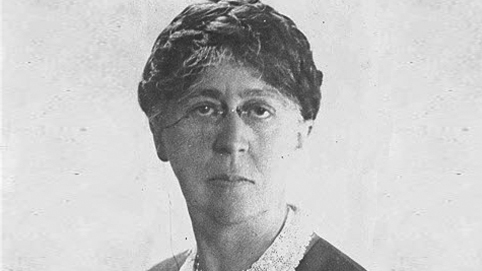
 Table of content
 Share
Share