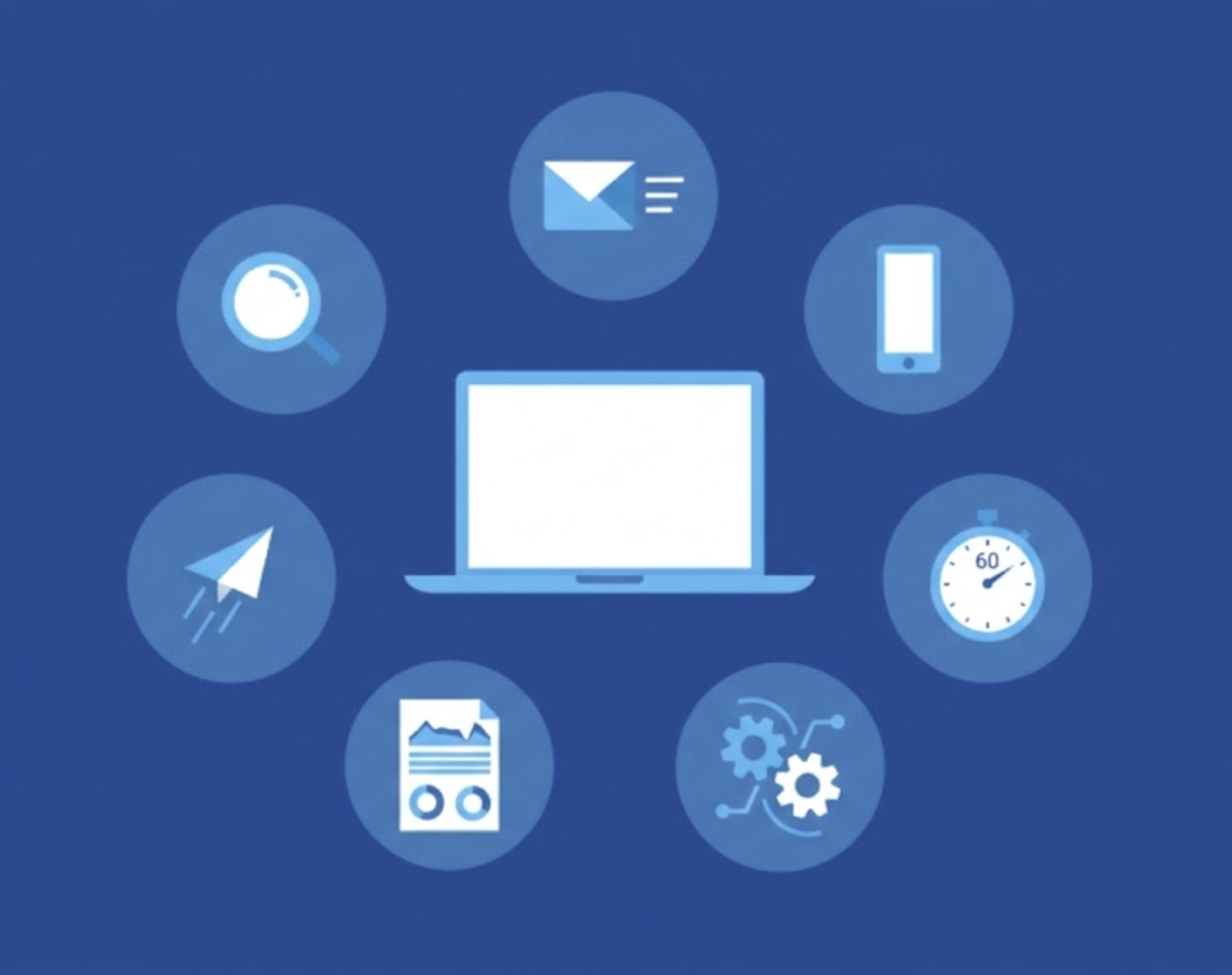
Marketing functions cover an enormous range of activities that are ever-evolving. We suggest categorizing them into seven primary groups. The primary marketing functions can be performed by an in-house marketing team or an outsourced agency. In this post, we will categorize the wide variety of tasks that marketing departments are responsible for.
1. Promotion
This is used to generate brand awareness and to inform target audiences about what a brand offers. Marketing specialists craft their messages to appeal to their specific product, brand, or audience segment. A range of channels are used:
Advertising and Media: Marketing teams develop campaigns for digital channels, print media, television, radio and outdoor advertising based on market research that target their audiences.
Digital Marketing: Social media, content marketing (blogs, videos, podcasts) and email campaigns build a coordinated online presence that bolsters brand recognition.
Public Relations and Influencer Marketing:PR activities build brand reputation through media exposure and community engagement.
Events: Trade shows, product launches and other branded events create experiences that connect customers with products and values.
2. Selling
Selling is the process of communicating with prospective buyers and following up on sales leads in order to establish and maintain a relationship. During this process, the seller guides the prospective buyer down the sales funnel. According to Harvard Business Review, “Increasing customer retention by just 5 percent increases profits by 25–95 percent .”
Marketing aids selling through campaigns for lead generation, lead nurturing workflows, and sales enablement materials like presentations, case studies, and competitive analysis. By knowing and mapping out the customer journey from awareness to purchase decision-making, marketing can create and measure touchpoints that help with the selling process at every step. Marketers and salespeople work together to position products, making sure that prospects understand how your offering differentiates from competitors’.
3. Product and Service Management
These are developed, designed, tested, implemented and enhanced, where needed, to meet the customer requirements. The marketing department is essential in identifying market opportunities and channels to collect consumer feedback for product development.
Marketing typically involves product research and development, following the requirements of customer needs and market demands. Marketing handles product planning, which deals with the features, functions, and specifications of the product or service. Product design, in the form of a material or virtual service, deals with the final aesthetic product elements, such as the appearance, packaging and other details. Marketing also handles product life cycles, by introducing and implementing new products as well as maturing products to meet the market conditions.
Products or services can also be improved and enhanced, on an on-going basis, with the help of customer feedback collected from the customers and the market. Product management should be in close contact with product research and development, product development, operations, and customer support to provide timely products or services with proper quality assurance and competitive advantage.
4. Marketing Information Management
This refers to the process of gathering, analyzing, storing, and distributing information to fine-tune your strategy and make informed decisions. Every function of strategic marketing is supported by data from customer surveys, online reviews, social media posts, website analytics, and market research reports.
Marketing teams may research their target market to know their customers’ demographics and behaviors, conduct competitor analysis to identify market gaps, or monitor industry trends to remain relevant. They may also do a SWOT analysis to identify strengths, weaknesses, opportunities, and threats for strategic planning. One of the lesser-known functions is sharing that data with other departments.
Sales teams, for example, can use marketing insights to prepare effective sales pitches and counter customer objections. Marketing information management binds all functions of marketing together by keeping decisions data-driven and strategically focused.
5. Pricing
The cost and value of the product is taken into account while fixing a price. Marketers consider several factors before finalizing the product price to ensure profit and competitiveness in the market.
Cost-based, value-based, and competitive pricing are common considerations. Cost-based pricing considers all associated costs including materials, labor, overhead, etc. Value-based pricing involves customer perception and their willingness to pay based on the value it provides. Competitive pricing is based on the price of similar products in the market. Brand-based pricing is also a consideration since more established and trusted brands have a higher perceived value, allowing for premium pricing- luxury brands vs discount retailers, for example.
Marketers implement different pricing strategies like premium pricing, penetration pricing, psychological pricing, dynamic pricing, etc. They track and adjust prices regularly based on performance and market conditions and ensure that all promotions and branding efforts are aligned with the price points for consistent messaging.
6. Financing
Financing is the act of acquiring money, whether internally or externally, in order to establish and implement campaigns. It is a topic that is often avoided, but is very important for marketing teams to achieve their goals and provide value.
Marketing teams often budget by planning specific goals and how much money will be spent on channels or tactics that can help them reach their company’s goals. Marketing teams also have both fixed and variable costs when it comes to operating a department, such as advertising, content creation, tools, and team members. Tracking and adjusting where budgets are being spent is a best practice to ensure that money is not being wasted and is going to the best-performing metrics.
Marketing teams must also prove their value by keeping a close eye on their ROI and using conversion rates, customer acquisition costs, and lifetime value to report their return on investment. Revenue increases that are a result of quality campaigns allow for future financing opportunities, as long as those campaigns have numbers behind them that can be reviewed and optimized. Marketing also helps acquire external funding by helping banks or investors understand a company’s business plan, as well as goals that both build the brand and generate healthy revenue streams.
7. Distribution
Distribution is the movement of goods or services from their source to the customer. Marketing teams identify and select distribution channels that best align with the specific product, brand, and target audience, to make sure offerings reach markets in the most efficient and cost-effective way possible.
Distribution channels may include online stores, e-commerce marketplaces, brick-and-mortar stores, direct-to-consumer (DTC) models, wholesalers, and distributors, among others. Channel selection should consider who the target customers are, how they perceive the brand, and where they expect the offerings to be available. E-commerce has revolutionized distribution, enabling businesses to reach global audiences and bypassing traditional middlemen.
Physical distribution also focuses on the logistics behind products getting to consumers, including transportation, inventory management, warehousing, and order processing. An omnichannel approach leverages multiple channels and touchpoints to create seamless experiences across online and offline interactions. Marketing managers need to sync up with supply chain teams when launching new products or campaigns—if marketing generates enough demand, the supply chains had better be able to handle it, or it will quickly become a PR disaster. Distribution is where marketing meets the customer.
The Power of Integrated Marketing Functions
The seven marketing functions are considered to be essential because they keep businesses operating as a system of interrelated activities rather than a set of random actions.
Promotion creates awareness
Selling builds trust
Product management ensures it’s relevant
Information management provides the insights
Pricing gets the value/profit balance right
Financing makes the campaigns possible
Distribution makes sure it gets delivered
Remove one of these seven activities and the whole customer experience falls apart.
Measuring success: Marketing departments pull data together from various sources to create analytics reports and then measure their success using key performance indicators such as website traffic, conversion rates, cost of customer acquisition, and ROI.
Strategic planning: Strategic planning is the process of setting objectives, identifying target markets, creating positioning strategies, and then ensuring that the same message is delivered through all communication channels via integrated marketing communications.
Organizational impact: Marketing people sit with every department and management team to fulfill the numerous functions necessary to acquire and retain customers. Companies that learn to master these seven functions will not just win customers, they will keep them and in so doing, ensure that the business will enjoy sustainable growth.


 Table of content
 Share
Share