LLMO: How to Get Cited by AI in 2026

February 13, 2026

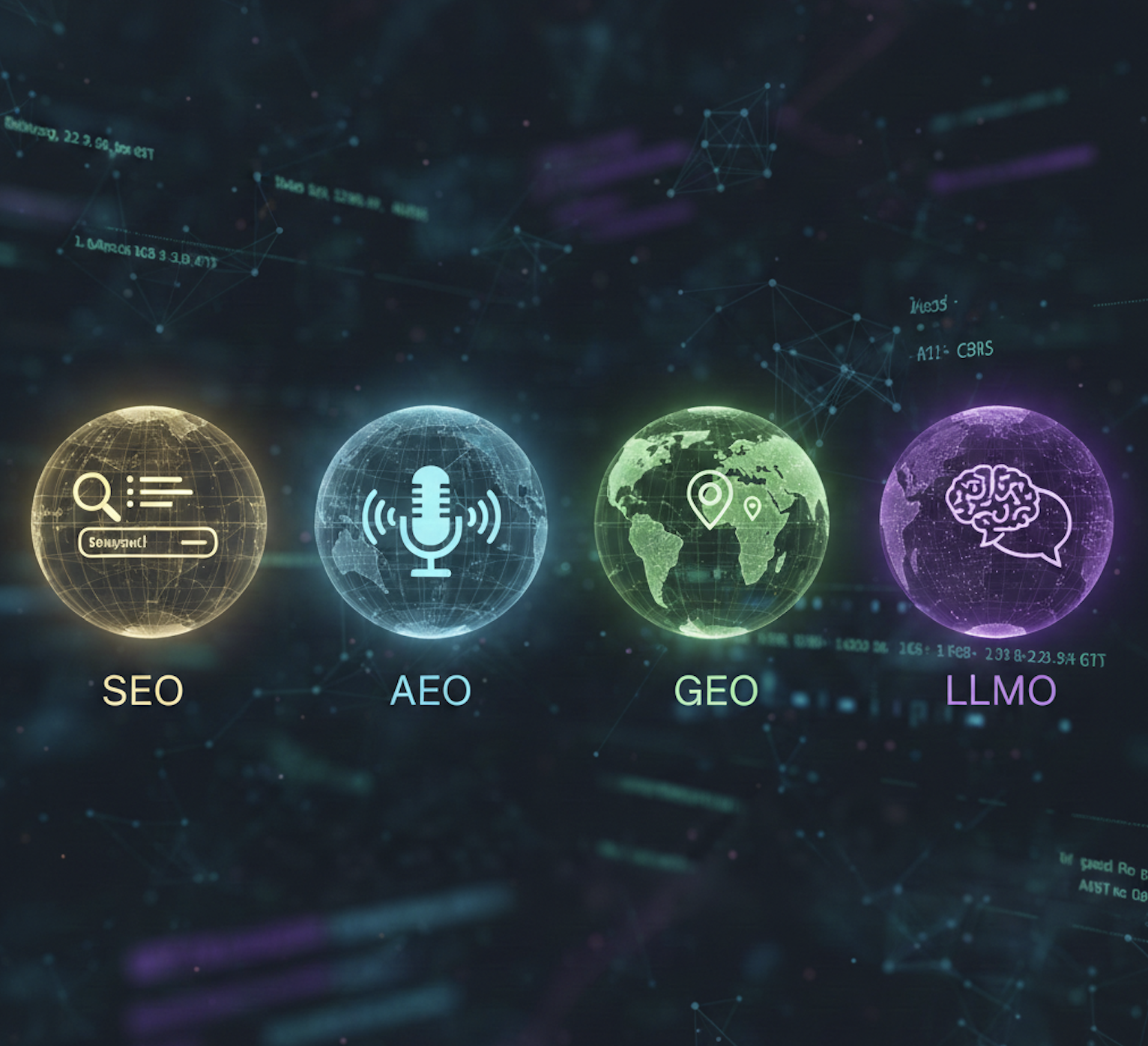
Traditional search traffic is drying up as people ask questions to ChatGPT, Google’s AI Overviews, and Perplexity rather than clicking on search result links. Large Language Model Optimization (LLMO) – or GEO – is the process of organizing your content, brand, and online presence in a way that AI systems like ChatGPT and Google’s AI Overviews cite you and recommend you to users when they ask questions.
LLMO is fundamentally different from traditional search engine optimization (SEO):
- Traditional SEO focuses on search engine rankings and keywords
- LLMO focuses on AI citations and direct recommendations
- AI systems discover sources in fundamentally different ways than Google’s algorithms
- SEO tactics do not transfer to AI content platforms
The clock is ticking, and the time to act is now. According to the Princeton and Georgia Tech team’s GEO: Generative Engine Optimization study, strategic optimization practices achieved 30-40 percent visibility improvements in generative engine responses—and the competitive advantage compounds for early movers.
LLMO vs. Traditional SEO
AI systems discover sources in fundamentally different ways than Google’s algorithm. When a user poses a question to an AI system, the AI performs semantic search—finding conceptually similar content rather than keyword-matched content. It then evaluates source authority, freshness, and factuality before deciding whether to cite you or not. Studies by the St. Louis Federal Reserve show generative AI adoption in US adults reached 54.6 percent in 2025, creating a parallel discovery channel that operates on a completely different set of principles.
Your page ranking tells the AI almost nothing about whether your content deserves to be cited. Clear, citation-rich content from known authorities is what AI systems reward. And unlike the Google transition that took years to fully consolidate, insights from Semrush show AI Overview trigger rates doubled from 6.49 percent in January 2025 to 13.14 percent in March 2025. The window of opportunity to implement LLMO is measured in months, not years.
Why Conversion Rates Matter
AI-sourced traffic is converting at significantly higher rates than traditional organic search. According to Ahrefs on LLM citations, content with quotes, statistics, and links to original data sources is 30-40 percent more likely to be mentioned in AI responses than unoptimized baseline content. This higher mention volume directly translates into more traffic for businesses that know how to optimize strategically.
Smaller businesses have an even bigger opportunity. Studies by Semrush on GEO versus SEO found lower ranked websites had 115 percent more visibility when optimizing for AI search. In traditional SEO it takes months or years to go from position 50 to position 10 in search. In the world of LLMO, the opportunity gap is compressed because AI systems evaluate authority differently—favoring citation-worthy content and entity optimization over raw domain authority.
Five Core LLMO Pillars
LLMO rests on five interconnected pillars that together work to establish your brand as a trusted source in the eyes of AI systems. Each pillar represents a different aspect of how AI systems discover, evaluate, and recommend content.
Make Content Clear
Semantic clarity means writing your content so AI systems instantly understand the main points and can extract useful answers. Insights from Manhattan Strategies analyzing GEO practices found clear heading hierarchies, direct answer sections near the top of the page, and extractable “meta answers” are critical.
Apply semantic clarity with these tactics:
- Place direct answers in the first 1-2 paragraphs, then dive into explanation
- Use descriptive headings that state the point rather than clever language
- Break complex topics into scannable sections with clear transitions between ideas
- Define technical terms explicitly the first time you use them
- Create FAQ sections that map to how users phrase questions in AI systems
Build Your Authority
Entity optimization means building your brand as the authoritative entity for your specific expertise domain. AI systems organize information around entities, not keywords, so your goal is to become the “go-to entity” when an AI system needs to answer a question in your niche. This requires a consistent, structured presence across your web properties.
Apply entity authority with these tactics:
- Create a comprehensive About page that clearly establishes expertise, experience, and credentials
- Implement Organization schema markup on your homepage and key pages
- Maintain consistent business information across Google Business Profile, LinkedIn, and directories
- Build topical authority by creating cornerstone content in your specific domain
- Connect related topics through internal linking that establishes entity relationships
Add Original Data
Information gain means creating unique insights, original research, or proprietary data that can’t be found elsewhere. According to the Princeton and Georgia Tech GEO study, statistics addition was one of the three most effective tactics for improving AI visibility.
Apply information gain with these tactics:
- Commission original research studies relevant to your industry or audience
- Publish proprietary data or metrics from your own business operations
- Include case studies with specific, quantified results from your work
- Add unique perspectives or frameworks that competing sites don’t offer
- Conduct exclusive interviews with industry experts and publish the results
Become Citation-Worthy
Citation-worthy content is content that AI systems naturally want to reference when answering questions. This is not about keyword optimization—it’s about creating authoritative, well-sourced content that an AI system would cite as a journalist would cite expert sources.
Apply citation-worthiness with these tactics:
- Include statistics, studies, and external citations that demonstrate your claims come from authoritative sources
- Quote relevant experts and link to their original work
- Structure data in formats that are easy for AI systems to parse and extract
- Create comprehensive guides that serve as go-to resources for an entire topic
- Build credibility through consistent, accurate information that develops trust over time
Secure Strategic Mentions
Brand mentions in authoritative third-party sources signal to AI systems that your organization is recognized and trusted in your domain. This is modern digital PR—not focused on building links for SEO, but on securing mentions across the set of sources that AI systems are using. Insights from Hueston on LLMO implementation found becoming a referenced authority across multiple high-authority sources dramatically increased AI citation frequency.
Apply strategic mentions with these tactics:
- Pitch your insights to industry publications and blogs in your niche
- Contribute guest articles to established platforms that AI systems frequently cite
- Pursue speaker opportunities at industry conferences and events
- Get mentioned in research reports and roundups of top solutions in your space
- Build co-citation networks by mentioning and linking to other authoritative sources

Common Mistakes to Avoid
Most organizations implementing LLMO are making critical mistakes that undercut their efforts. These mistakes range from misunderstanding how AI systems evaluate sources to misaligned tactics across SEO and LLMO to rushing implementation without strategic planning.
Keyword Stuffing Still Hurts
SEO taught us that keyword density matters. AI systems work in the opposite direction, prioritizing semantic relevance and natural language over keyword frequency. Optimizing for keywords directly conflicts with optimizing for AI mentions. Instead of asking “how many times should I mention this keyword”, ask “what questions would someone ask about this topic, and am I answering them clearly?”
Entity Foundation Gets Overlooked
Most brands treat their brand name as incidental to their content strategy rather than the core organizing principle. AI systems organize all information around entities—not keywords or topics. If you haven’t established your brand as a recognized entity with verified information, schema markup, and topical authority, AI systems have no way to know who you are or what you’re an authority on. Without this foundation, all other optimization efforts underperform.
Content Lacks Any Data Support
Generic content without statistics, research, or specific data points doesn’t get cited by AI systems. The Princeton and Georgia Tech GEO study found that adding statistics to content improved AI visibility by 30-40 percent . AI systems need something concrete to reference—a statistic to quote, a study to cite, or original research to attribute. Without this, your content is invisible to AI systems regardless of how well-written it is.
Starting Without Clear Strategy
The most successful LLMO implementations began with strategic planning: understanding which topics matter most for the business, which AI platforms the target audience was using, and where genuine authority could be built. Many organizations instead treated LLMO as just another checklist, implementing llms.txt files and schema markup without first answering the core questions:
- Is my content actually citation-worthy?
- Am I genuinely an authority in my space?
- Do I have any unique insights that other people would want to cite?
Tactical implementation without answering these questions becomes an expansive distraction that produces no meaningful results.
Take a look at our news on Marketing & Sales

by Shanel Pouatcha

by Shanel Pouatcha

by Nick Perry

by Nick Perry

by Nick Perry

by Nick Perry

by Shanel Pouatcha

by Shanel Pouatcha

by Nick Perry

by Nick Perry

by Nick Perry

by Nick Perry