What Is Critical Path Method and How Does it Work?

February 18, 2026

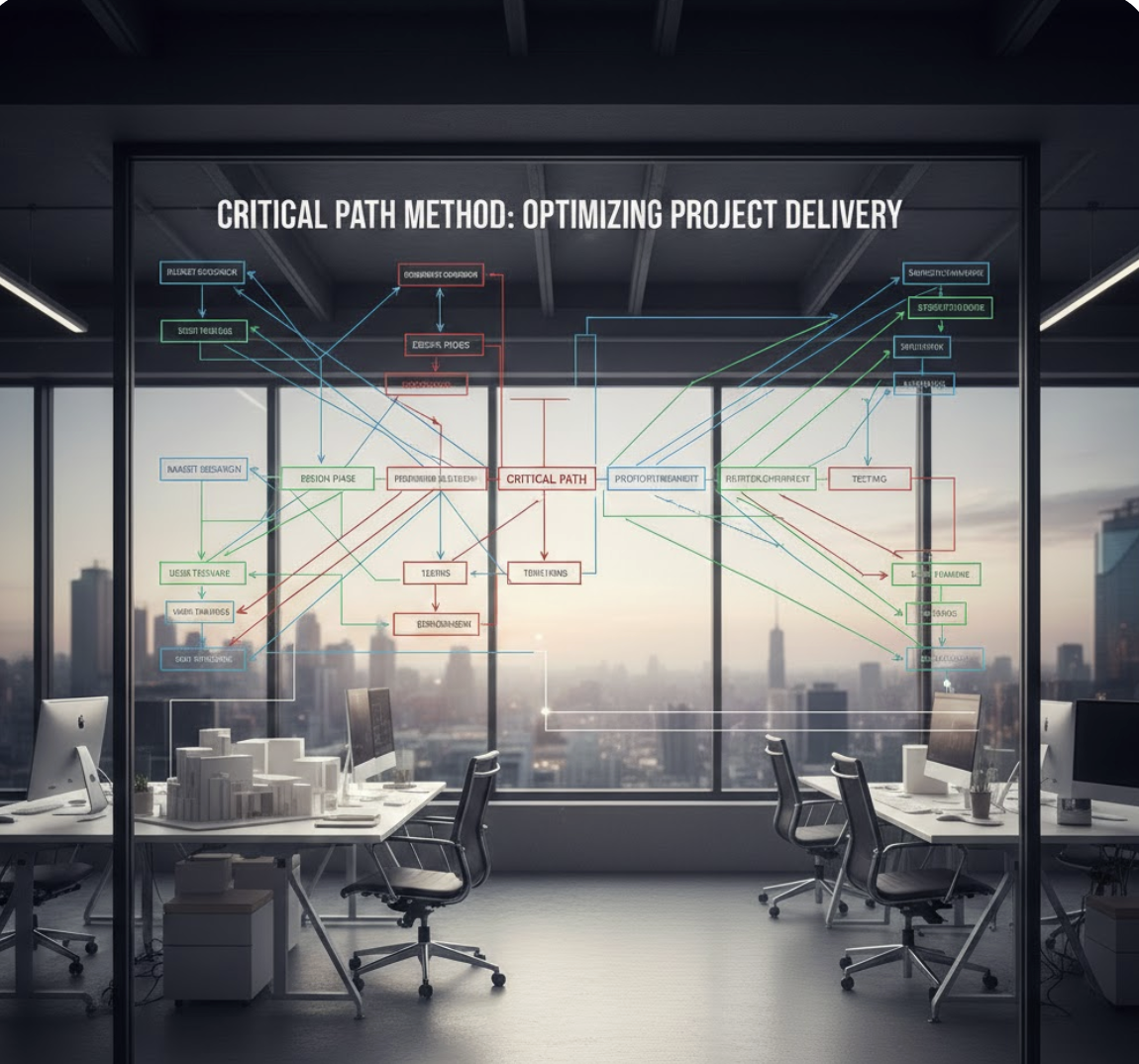
In the pantheon of project management, few techniques are as widely acclaimed, or as frequently misapplied, as the critical path method. In its purest form, the technique offers project teams the mathematical means to determine which activities are genuinely critical, in what sense, and why. Deployed correctly, this information should tell managers precisely how long a project will take and, more important, where to focus scarce resources to keep things from falling behind schedule.
History
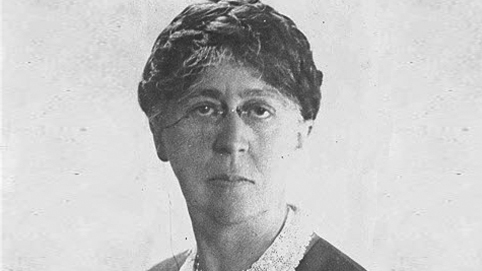
CPM developed at DuPont in the late 1950s, a byproduct of a shutdown scheduling problem. According to an article in the Journal of Housing and the Built Environment, two chemical engineers, Morgan R. Walker at DuPont and James E. Kelley Jr. at Remington Rand, collaborated to solve the problem from 1956 to 1959. At the time, DuPont was looking for a better way to schedule the shutdown of their chemical plants. This work frequently resulted in cost overruns. As the article describes, many factors often interlinked in complex ways, and the department tasked with improving plant scheduling struggled with existing methods.
To solve the problem, Walker and Kelley had to account for these interdependencies, so they designed an algorithm that would identify the critical path and mathematically highlight those activities that truly did matter. According to Historical Projects’ page on the history of CPM, predecessors to critical path analysis go back to work carried out at DuPont during the Manhattan Project. In the late 1950s, Kelley and Walker started using this approach, first applying it in a test on plant shutdowns in 1957, before publishing the method in 1959. According to NASA’s historical overview of the method, DuPont used the method to achieve 25 percent savings on plant shutdowns. Stanford University researchers wrote in the Harvard Business Review in 1963 that CPM is “a powerful but basically simple technique for analyzing, planning, and scheduling large, complex projects.” The name, though, was a contribution from the people working on PERT (program evaluation and review technique), at Booz Allen Hamilton and the U.S. Navy for the Polaris missile program, Kelley wrote in 2004.
How CPM Works
CPM works by identifying upper and lower time limits for project activities. An article published on ResearchGate on CPM implementation, explains that CPM identifies the scheduled activities sequence that determines the project duration through a network analysis of the tasks. To do so, each task has four calculated values: earliest start (ES), earliest finish (EF), latest start (LS), and latest finish (LF).
Forward Pass: How to Calculate Earliest Times
The earliest start is the earliest an activity can start once its predecessors have been completed. The forward pass runs from the beginning of the project to the end, determining the earliest time each activity can start and finish. A formula on how to calculate the earliest start and finish is:
EF = ES + Duration
For example, assume you have a task to design a website. The earliest start for the task is 0, and the duration is 5 days. In this case, the earliest finish would be 5 days (0 + 5 = 5). If you have more than one predecessor, the maximum of all the predecessor’s latest finish times becomes the earliest start. In our example, assume there are two predecessor tasks to the website design. Task A (writing website content) finishes on day 8, and task B (creating website graphics) finishes on day 10. Then, the earliest start for the website design task becomes 10. As you can see, the 10 is the larger of the two latest finish times.
Backward Pass: Calculating the Latest Times
The latest finish is the latest an activity can finish before delaying the project. According to an article published in the International Journal of Scientific & Engineering Research, the backward pass is done by starting at the project end and working toward the beginning, identifying the latest time each activity can occur without delaying the project.
The formula is:
LS = LF – Duration
For example, if the project’s last task, testing, must finish by day 30 and has a duration of 3 days, then its latest start becomes day 27 (30 – 3 = 27). When you have multiple successors for a task, the minimum of all the successor’s earliest start times becomes the latest finish. In our example, assume the quality assurance task must start no later than day 25 and the user acceptance testing task must start no later than day 23. The latest finish for the previous task in the chain, development, must be day 23. The reasoning is straightforward: if development did not finish by day 23, quality assurance or user acceptance testing (or both) would have to start late, delaying the whole project.
Float Calculation: Identifying Where the Flexibility Is
Float or slack refers to the time that a given task can be delayed without delaying the project. Research published in the European Journal of Multidisciplinary Studies, on the use of CPM, states that by calculating the difference between the earliest and latest start times (or finish times), the total float for each task in the project can be identified.
The formula is:
Total Float = LS – ES (alternatively, LF – EF)
For example, if a task has an ES of day 5 and a LS of day 8, it has 3 days of float (8 – 5 = 3). The task could be delayed by a maximum of 3 days without affecting the project end date. In contrast, if a task has an EF of day 15 and LF of day 15, it has zero float (15 – 15 = 0).
Identifying Tasks that Matter Most
The critical path is the longest chain of activities in the network from start to finish. Any activities with zero float are on the critical path because they have no room for error. If any activity on the critical path is delayed, the project is delayed.
For example, assume a project has five tasks (A, B, C, D, and E). Tasks B and D have 3 days of float. Task A is an immediate predecessor to tasks B and C, task B is an immediate predecessor of task D, and task C is an immediate predecessor of task E. A, C, and E all have zero float; therefore, the critical path is A → C → E. This sequence of tasks determines the shortest possible time to complete the project, and project managers should ensure that these three critical activities complete on schedule.

CPM in Practice: Applications in the Real World
CPM has been applied to every project type imaginable. Research from Stanford University provides an excellent discussion of its practical applications. The most common applications have been in construction projects; for example, CPM was used to schedule the building of the World Trade Center in 1966 and continues to be used for scheduling major construction projects worldwide today. In manufacturing, CPM is used for production sequencing and plant shutdowns, and in software development, it is used for release planning and feature rollout scheduling.
The ability to optimize resource allocation is CPM’s real power, especially when used with schedule compression (aka crashing). Research published in MDPI’s Sustainability, states that the critical path method enables the identification of activity relationships based on the availability of resources, as well as the prevention of most activity delays, common in construction projects as a result of limited resource availability.
PERT vs. CPM and Gantt charts
CPM is often mistaken for PERT (program evaluation and review technique). In practice, CPM and PERT are two different techniques serving two very different purposes. The primary difference between the two methods is the former uses deterministic time estimates, single, fixed durations for each activity, and is therefore ideal for projects with well-understood, routine activities such as building or manufacturing. PERT, in contrast, requires three time estimates (optimistic, most likely, and pessimistic) and is used in the context of R&D projects where there is a lot of uncertainty around how long a particular activity will take.
Gantt charts are complementary rather than in competition with CPM. Where CPM uses network analysis to identify the critical path, Gantt charts are used for a visual representation of the project’s timeline. Gantt charts were the main project management tool before 1959 (when both PERT and CPM were published). In fact, according to ScienceDirect, CPM and PERT transformed project management by providing the activity network model. Today, project management tools provide Gantt charts using CPM calculations as the engine.
Tools and Important Considerations
Enterprise software such as Oracle Primavera P6 or Microsoft Project has made it easy for any sized company to adopt CPM. These tools will calculate the forward pass and the backward pass and report on the critical path and any float. As CPM once required mainframe computing to do in minutes or hours, these calculations can now be performed instantly. In addition, cloud-based options such as Smartsheet, Wrike, Monday.com, and Asana are helping teams put CPM into practice without extensive training.
There are some caveats, however. The critical path method, by design, assumes an unlimited resource pool, an unrealistic scenario. In practice, that means that you cannot simply accelerate the project by adding more resources to tasks on the critical path. Also, the approach requires good duration estimates and a comprehensive understanding of dependencies between the activities. In other words, the old mantra, “garbage in, garbage out” applies. CPM is also not very suitable for projects with high uncertainty, instability, or creative processes. Moreover, while CPM will show where to focus resources to prevent schedule delays, a disproportionate focus on the critical path can be to the detriment of other tasks. These non-critical activities might not be on the critical path, but that does not mean they do not impact the overall project quality or team morale.
Take a look at our news on Operations & Management

by Shanel Pouatcha

by Shanel Pouatcha

by Nick Perry

by Nick Perry

by Nick Perry

by Shanel Pouatcha

by Nick Perry

by Nick Perry

by Shanel Pouatcha

by Nick Perry

by Nick Perry

by Nick Perry