Lead scoring is an approach to classifying leads based on potential to purchase. Rather than assessing every lead equally, businesses use a system to evaluate and rank prospects based on their likelihood to become customers. By assigning each lead a numerical score, sales teams can quickly prioritize their efforts on the highest-potential targets. For SMBs with lean sales operations, effective lead scoring can be a gamechanger for productivity and conversions.
MarketingSherpa research found that lead scoring can increase lead generation ROI by 77 percent compared to organizations that do not have a scoring system in place. By working from the top of the sales funnel first, sales teams are able to convert more leads with less effort.
Most Leads Aren’t Sales-Ready
In fact,according to MarketingSherpa’s 2024 State of Sales Prospecting Study, a mere 27 percent of leads are ready-to-qualify at the time they’re handed off to sales. Without lead scoring, sales teams spend countless hours on leads that would not have converted anyway. A good lead scoring model objectively separates out the true prospects from the noise.
A study by Gartner revealed that companies using AI-enhanced lead scoring experienced a 30 percent boost in sales productivity. A recent Forrester report showed that businesses that use lead scoring experience a 38 percent higher lead-to-opportunity conversion rate and 28 percent shorter sales cycles. For SMBs facing off against large competitors, that kind of efficiency boost is a real leveler.
Benefits for Marketing and Sales
Marketing and sales teams both benefit from the improved alignment and clarity that lead scoring provides. Marketers get clear definitions of a qualified lead for consistency between sales and marketing teams. In fact,according to Demand Gen Report’s 2024 Lead Scoring Survey, 74 percent of marketers report that lead prioritization is the primary benefit of a lead scoring model.
Two Types of Data
An effective lead scoring model relies on two types of data: explicit and implicit. Explicit data, also known as demographic or firmographic data, are the attributes leads provide to your organization. This includes job titles, company size, industry, and location. For example, a marketing director at a 200-employee company in your target industry will score higher than an intern at a non-target company located in another country.
Implicit data are behavioral signals, such as website visits, email opens and clicks, content downloads, webinar registrations and attendance, and social engagement. These interactions with your marketing assets reflect intent levels. A lead that visits your pricing page three times has stronger purchase intent than a lead that viewed a single blog post.
Most successful lead scoring models use both explicit and implicit data.According to Gartner research, high-converting organizations use an average of four criteria to score their leads. While that may sound like a lot, starting with a long list creates unnecessary complexity. For most SMBs, five to seven signals is a manageable place to start.
Five Steps to Start
Step 1: Identify your ideal customer profile. Look at your best current customers to identify commonalities. What job titles do they have? What size companies do they work for? What industries are they in? This becomes your baseline for demographic scoring.
Step 2: Determine high-intent actions. Collaborate with your sales team to identify behaviors that correlate with high purchase intent. Requesting a demo or visiting a pricing page are clear indicators of stronger intent than, say, subscribing to a newsletter.
Step 3: Assign point values. Create a 100-point scale. Allocate higher points to the characteristics of your ideal customer (relevant industry: +15 points, decision-maker title: +20) and high-intent behaviors (requesting a demo: +25, visiting pricing page: +15)
Step 4: Implement negative scoring. Deduct points for signals that a lead is unqualified or unlikely to convert. Negative scoring examples include competitor domains, visiting your careers page (job seeker not buyer), and inactivity for 60+ days. HubSpot notes that negative scoring helps filter out unqualified leads.
Step 5: Set a minimum qualifying score. Determine the score above which a lead will be sent to sales. Most businesses start with 50-75 points and adjust based on performance. If sales are getting too many unqualified leads, raise the bar. If qualified leads are slipping through, lower it.
Start Simple, Refine Later
The most important lesson from Forrester’s research is that lead scoring models need constant refinement. Quarterly reviews of your scoring criteria can surface which score ranges have the highest conversion rates, as well as which signals are true predictors of purchase intent.
The biggest mistake SMBs make is overcomplicating early lead scoring models. Too many variables muddy the signal and make it difficult to get buy-in from sales. It’s better to start with simple rules that cleanly differentiate good leads from bad, then add complexity based on what your conversion data tells you.
The vast majority of CRM systems, including HubSpot, Salesforce, Zoho, and Pipedrive, have native lead scoring features. For SMBs just getting started with scoring, the out-of-the-box tools are often sufficient without the need for expensive third-party solutions.
Gain Your Competitive Edge
Despite lead scoring’s clear benefits,a mere 44 percent of companies use scoring models. For SMBs, a simple lead scoring model is low-hanging fruit for gaining a competitive edge against larger rivals. When sales teams focus on high-potential leads and deliver personalized, timely outreach, SMBs win with higher conversion rates and shorter sales cycles.
Lead scoring doesn’t have to be a capital or time-intensive project. Basic lead scoring models can be created in a few days and executed on with native CRM tools. A clear definition of your ideal customer, monitoring of prospect behavior, and discipline to focus on the best leads will pay off for SMBs with limited sales budgets.

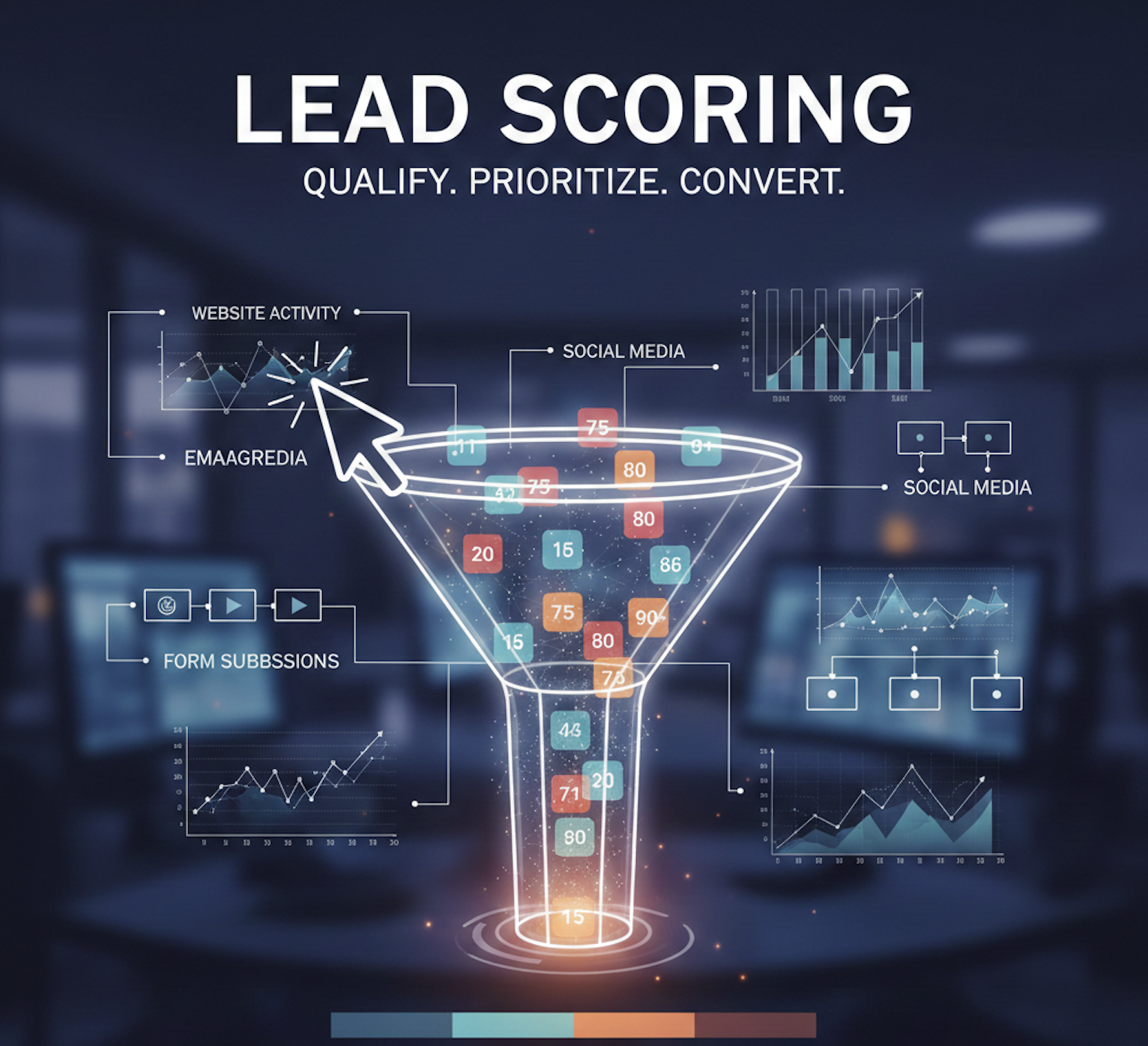
 Table of content
 Share
Share